Sunday, 10 January 2010

Awful Album Covers

My Dad has three main hobbies. He enjoys doing jigsaw puzzles, he is a trainspotter and he is a stamp collector. I find it hard to muster any enthusiasm for the first two. His stamp collection, however, does hold some interest for me.

Since sending off tuppence to the Royal Mail as a you
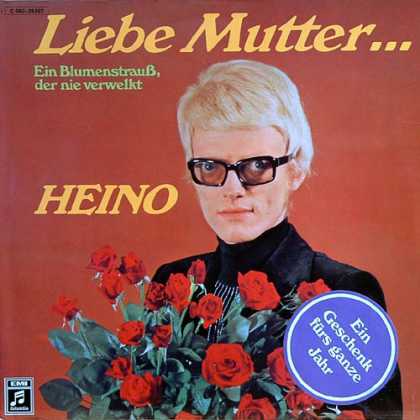
ng boy he has been sent their First Day covers ever since. The latest batch to come through were based around classic album covers and included, amongst others, The Division Bell by Pink Floyd, Mike Oldfield’s Tubular Bells and The Rise and Fall of Ziggy Stardust and the Spiders from Mars by David Bowie. It got me thinking though. All of the albums which featured on these stamps were, in their own unique way, works of art. But what about the worst album covers, album art so lacking in taste and style that you can only marvel at their brutality? So, I had a little look on the internet to see what I could find and here is a small selection of what I found. Brace yourselves...


I don't know about you but I find this terrifying.


By request only, apparently. Thank God.


One can only imagine how many times
he's been punched since this was released.


I think this may be the greatest thing
I have ever seen in my life.


My favourite is the clinically obese one.


"We're going to have to ask you to leave, sir.
You're scaring the children."


I can only assume he didn't leave Glasgow alive.


"I told you to put the incense out before you went to bed!"


Germaine Greer's favourite album cover.


Have a look for yourself online. Believe me, there are thousands.

Wednesday, 2 December 2009

Cheryl Cole feat. Will.i.am - 3 Words

I was surprised to hear that Cheryl Cole was releasing a new single. Her debut single, Fight For This Love, seemed such a singular, cataclysmic Event I thought that pop music as we know it was thus rendered obsolete aswell as making everything you and I hold dear seem pointless. Such was the foaming-at-the-mouth, piss-your-pants hoo-haa it caused upon it’s release one could be forgiven for thinking it had cured both AIDS and cancer in one diamante'd swoop. How wrong one can be.

Our Cheryl is set to release her follow-up single, 3 Words, on 20th December in what can only be assumed to be her stab at making Christmas Number 1.

The song, featuring album collaborator Will.i.am of the Black Eyed Peas, is unique in its uniformity. It’s not distinctly awful in any particular way, nor is it jaw-droppingly progressive. Instead, it ploughs the steady, no-risk electro-pop field which has served Kylie Minogue so well for the last decade (I keep forgetting the Noughties are coming to an end. Scary stuff). I’d love to sit here with bile dripping from my fangs and lay into it with the venom of a pissed off pensioner but it just doesn’t rile those emotions. It is too darn comfortable.

If anything, the talking point of it's release is the video in which Mrs. Cole wears a blonde wig for a bit. Pop Music is eating itself again...

Monday, 16 November 2009

The Intros Round

This weekend just departed I took a trip to Abingdon, near Oxford, to visit a friend for his birthday. Another friend of mine picked me up from Bath (ironically at a notorious dogging spot) and off we went down the M-something or other, music throbbing from the speakers of the car.

As we approached Abingdon the speakers began oozing the inimitable treacle of a Motown number. It was Heard it Through the Grapevine by Marvin Gaye. I turned to the driver of the vehicle and said “It has to be the greatest intro of all time”. It’s menacing yet seductive, unsure yet confident – everything all at once. It got me thinking about similarly majestic introductions to songs and here be a small list (Come on, I didn’t think about it all weekend):

Reach Out, I’ll Be There – The Four Tops: Four bars of windswept raw emotion from Motown’s hit machine, Holland-Dozier-Holland. Perfection.

(I Can’t Get No) Satisfaction – The Rolling Stones: Despite having heard it almost as many times as Mick Jagger has paid off pregnant supermodels, it is probably the greatest riff of them all.

Help! – The Beatles: With so many to choose from it is impossible to pick just one but this 1965 single positively jumps out of the speakers with electrifying insistence.

20th Century Boy – T. Rex: Guaranteed to blow any set of speakers when played loud, never have two solitary notes sounded so bloody raunchy.

This Charming Man – The Smiths: Johnny Marr’s riff dances merrily from his guitar on arguably the Smiths most recognisable track.

Be My Baby – The Ronnettes: Generally lauded as one of the finest pop songs ever written, it’s all about that beat. Not bad for a murderer (Phil Spector).

Wouldn’t it be Nice? – The Beach Boys: Yes, Good Vibrations is probably the better song but this sun-baked, stoned and skewered intro captures the simple, child-like essence which make the Beach Boys so appealing.

Once in a Lifetime – Talking Heads: Kicks in with all the bombast of a flaming hot, funky meteor landing in your lap from nowhere.

Fashion - David Bowie: I know, I know; my unhealthy addiction to David Bowie infiltrates every darn aspect of my life to the point where I only like people on the proviso that they like David Bowie but the synthy upbeat is an exceptionally wry observation on the mindless conformity of the songs subject matter. The listener is fooled from the off.

Sunday, 25 October 2009

Wolfmother - Cosmic Egg

Having garnered both commercial and critical success with their eponymous 2005 debut album, Aussie retro-rockers Wolfmother fell apart due to musical differences. Seriously. Even their break-up was heavily indebted to Rock’s golden era. However, singer/guitarist Andrew Stockdale clung onto the name, recruited three presumably passive musicians and made a follow up album, Cosmic Egg.

To say that Stockdale continues where he left off on Wolfmother’s previous album is like saying Hitler was a bit of a knob. By that I mean a grand understatement. This latest offering could easily have been packaged as a double album with it’s predecessor such are the similarities and continued themes such as sorcery, staring vacantly into oblivion’s still valleys, naked, having lost your clothes, and yet more sorcery.

In the intervening four years between albums it is instantly clear that Stockdale hasn’t been listening to any new music whatsoever. The inspiration and influences which helped shape the band’s debut are still ever-present: The White Stripes guitar stylings on New Moon Rising screech and scream like a banshee whilst White Feather is AC/DC at their most radio-friendly; elsewhere the colossal Zeppelin-like stomp of Sundial and 10,000 Feet strut cockily onward.

When it’s good the album is a force to be reckoned with. California Queen gallops forth into a tie-dyed sunset and Pilgrim piles on more Priapismic riffage. Ah, the riffs. There are some truly filthy riffs present throughout - riffs so mucky you’ll feel compelled to have a wash after listening.

However, when the album is bad it’s pretty nullifying. The record lets itself down on In the Morning, a self-indulgent track with a genteel introduction exploding into beaming power-chords before descending into a rambling guitar solo/wank. Far Away is a tepid stab at the power-ballad and the song “most likely to encourage holding lighters aloft”. It even has a bit of November Rain ivory tinkling at the end.

Final track Violence of the Sun is the album’s Altamont. A droning, dying beast, thrashing around in it’s own excretia with it’s last ounces of energy, it provides little comfort. In fact, it’s mildly distressing.

This isn’t groundbreaking in any conceivable interpretation of the word yet it is never meant to be. This is Guitar Music for the Guitar Hero generation; guitar solo as proof of ability, riff as king. A celebration of the glorious overblown pomposity of Rock music, Cosmic Egg is a stoned, shaggy album, tailor-made for beach parties whose attendees are Gap models with Rolling Stones tongues on their t-shirts. Tell Jim Morrisson I said Hi, maaaan.

Sunday, 27 September 2009

Revolving Door Policy: Ever-Changing Faces in Pop and Rock

As you may have heard last week the earth-shattering news was delivered that Keisha Buchannan, the only original surviving-member of British girl-group Sugababes, was leaving. She claims she was forced out, but that’s not the point. The point is that Jade Ewen, Britain’s fifth-placed singing doll at this year’s Eurovision Song Contest, will be the seventh person to have “sung” in the group in eleven years – looking more and more like a political coup by the day: Founding member, gathering dust, ousted for fresher blood by the sexy, sexy underlings.

And that got me thinking. Music groups, just like groups of people in general, are inevitably going to have rifts and arguments and full-blown bust ups. New people will come and new people will go. In the music industry however, does the original line up necessarily mean the best?

It’s a tough one to answer. You may think John, Paul, George and Ringo had been mates for many, many years before encountering stratospheric success as the Beatles, but that’s not the case. John’s friend from art school, Stuart Sutcliffe, and drummer Pete Best made up the original line up during long days and nights, pilled up to the eyeballs in seedy Hamburg clubs. Sutcliffe was to later die from a brain haemorrhage, Best was replaced by the more showbiz Ringo Starr. Cue the changing of the world.

Then there are the Rolling Stones. If ever a band had a revolving door policy it was the Stones. Due partly to the fact that the list of musicians who have played on their records over the years is as long as Mick Jagger’s list of conquests (well, not quite) the Stones may pose for photoshoots as a quartet but really, since the late-sixties at least, they have always employed a wealth of backing singers and musicians. Original bassist Bill Wyman left in the early nineties. He was easily replaced. It is the role of Keith Richards’ guitar partner which has seen the most chopping and changing down the years.

Originally Brian Jones, his tenure was brought to an abrupt end after he drowned in his swimming pool. Replaced by Mick Taylor, the Stones then embarked on the most productive phase of their career, producing a string of albums which they have failed, often spectacularly, to top since. Taylor, like so many others, was drained by the vampiric nature of the Stones and their lifestyle and Ronnie Wood was brought in to fill the void. Keith Richards’ best buddy, Wood has been playing solid lead guitar with the band for the best part of 34 years now, yet in that time the Stones have failed to reach the exhilarating peaks of the Mick Taylor years.

A more contemporary look will lead us to Take That, reincarnated as Topman mannequins, all stubble, earthy tones and turtle necks. Their success in the early-nineties was founded on a blend of personalities: Gary Barlow as the homely songwriter; Mark Owen as the baby-faced cutie; Robbie Williams as the daft lad-about-town; Jason Orange and Howard Donald as, well, muscled dancers. When Robbie Williams left it also showed that he was the only one with the balls, or vision, to do so. Could you have imagined Howard Donald storming off in a maelstrom of cocaine and booze to venture into the unknown, into the land of the solo career? It took a lot of guts, I hand Williams that.

After plodding on for a few more singles the band finally split, only to re-emerge in the mid-noughties. People now said how mature they were to which I thought, “How could they be any less mature than what they were? In one of their earlier videos they were writhing around in jelly and ice-cream for heaven’s sake...” They are now more successful than they ever were. The screaming girls may be mothers now but the band can count themselves amongst British pop’s elite.

And then there are those dedicated, faithful groups, cohesive units closer than family itself.
One that instantly comes to mind is U2. Originally called Feedback, the band has been together for the best part of 33 years, lasting longer than a worrying amount of marriages. They, like every other band, have had their heated moments yet instead of anyone walking out or being sacked (not even bassist Adam Clayton was punished when he missed a gig in Sydney due to being drunk; instead the other members skilfully guided him towards spiritual enlightenment) they re-invented themselves from post-punk kids to stately, globe-harnessing rockers, via pony-tailed, religious charmers of America and nihilistic Rock Gods. This way they always kept things fresh.

ABBA are another group who, for better or worse, remained with each other until they stopped making music. You couldn’t imagine another member replacing one of the originals though, could you? For a start it would be dangerous to upset the cosy palindrome effect of their name: could you imagine ABAG? DBBA? ZBBA? This would make auditioning a new member a curious process (“Name must begin with an A...”)

Personality also plays a significant role. The Beatles, as John, Paul, George and Ringo were so distinct. The same applies to the core of the Stones; Mick Jagger and Keith Richards’ relationship is one of Rock’s most treasured possessions.

Personality, in that respect, isn’t often mentioned in the same sentence as the word Sugababes. They are essentially backing singers mashed together like a hideous creature from the Island of Dr. Moreau. They are simply not loved enough for anyone to give a shit.
Thursday, 13 August 2009

Top 10 Les Paul Players

Only within the last couple of hours has news filtered through that Les Paul, the creator of one of the most iconic guitars in music, has died at the age of 94 in New York.

Along with the Fender Stratocaster, the Les Paul is instantly recognisable as a design classic, yet it is the Les Paul which is favoured more among rock musicians.
So, here is a hastily compiled list of ten Les Paul players in the Rock idiom:

1. Jimmy Page (Led Zeppelin, pictured) – With his Les Paul slung down by his knees, Page is the template by which all Les Paul users go by.
2. Slash (Guns ‘n Roses) – Remarkable is the fact that he could actually put the thing on.
3. Mick Ronson – The Les Paul player in the glam era.
4. James Dean Bradfield (Manic Street Preachers) – Used a Les Paul thrillingly on the Manic’s snarling early records.
5. Jeff Beck – Now a Fender Stratocaster player, Beck was, in the 60s, synonymous with the Les Paul.
6. Eric Clapton – Like Beck, Clapton is seldom seen nowadays without a Fender Stratocaster, yet his early career saw him use a Les Paul replete with a Marshall amp and more tone and sustain to wave a stick at. Perfect for bludgeoning Blues.
7. James Hetfield (Metallica) – With a pneumatic right hand, Hetfield’s Les Paul takes one hell of a beating.
8. Marc Bolan (T Rex) – With that pout, perm and Paul (Les), who could possibly resist?
9. Neil Young – When rocking out, Young usually goes for a well-worn black number.
10. Nigel Tufnel (Spinal Tap) – “The sustain, listen to it...”

Wednesday, 12 August 2009

Peter Andre - Behind Closed Doors

As Peter Andre continues his charm/nausea offensive following his split from Katie Price, this week sees him release the first single from his ever-impending album.

Behind Closed Doors is stodge-pop by numbers. It starts, it finishes. The bit in the middle has crunchy guitars, a beat which is an abhorrent attempt at creating Timbaland-style balladry, and a new approach to vocals from Andre. Gone is the over-sexed saccharine squeal, swapped here for a gruff, pseudo-mature husk which is as transparent as Andre is expendable.

Expect the lyrics to be interpreted as a looking glass into the Andre-Price’s pea-brained world. Expect everyone to like it in an ironic way too.